Quid me anxius sum? (Alfred E Neuman, Mad Magazine circa 1956). Facio, ita.
Friday, 13 September 2013
Service with a smile: continued (again).
A recent trip to Jersey gave us the opportunity to partake of the delights of Coffee Republic. To be accurate, my IWC had the coffee and I had a rather nondescript cup of Earl Grey (such sophistication for one from Trethomas). I've had a pop at Costa Coffee and Starbucks in the past and, I'm afraid, now it's the turn of Coffee Republic. Lousy coffee by all accounts in a mug with an intriguing slogan. The beans were 'lovingly brewed', allegedly. This got me thinking about how would we know the amount of affection that went into producing each mugful. Maybe something along the following lines happens in the brewery/roastery...............?
Wednesday, 11 September 2013
Commemorating the start of WW1
Although not deliberately planned (Honest! I really don't think that far ahead), my last post mentioning the poet Marvin Bell's anti-war activities provides a link to this present one on a related theme - commemorating the hundredth anniversary of the beginning of WW1. I'm involved in two activities around this which, at first glance, might seem contradictory.
On the one hand, I am researching the backgrounds of the names appearing on our local WW1 memorial, with the object of writing a book, the publication of which will coincide with the hundredth anniversary. On the other hand, I am involved, through my membership of the Tavistock Peace Action Group, in devising an exhibition which will not only remind people of the true cost of that war but also promote peace. Finding out the personal stories of the thirty two men who died in the former exercise informs my contributions to the latter and convinces me that it is a worthwhile exercise.
Within that context, I have just signed an open letter organised and publicised by the No Glory in War group. The letter reads:
We are disturbed, therefore, to hear that David Cameron plans to spend £55,000,000 on "truly national commemorations" to mark this anniversary. Mr. Cameron has quite inappropriately compared these to the "Diamond Jubilee celebrations" and stated that their aim will be to stress our "national spirit". That they will be run at least in part by former generals and ex-defence secretaries reveals just how misconceived these plans are.
Instead we believe it is important to remember that this was a war that was driven by big powers' competition for influence around the globe, and caused a degree of suffering all too clear in the statistical record of 16 million people dead and 20 million wounded.
In 2014, we and others across the world will be organising cultural, political and educational activities to mark the courage of many involved in the war but also to remember the almost unimaginable devastation caused.
In a time of international tension we call on writers, actors, musicians, teachers and campaigners to join with us to ensure that this anniversary is used to promote peace and international co-operation.
I join many celebrities in appending my signature to this letter (Simon, Callow, Tony Benn, Patrick Steward, Terry Jones, Brian Eno, Ken Loach, Timothy West to name just a few) and more details can be found on the No Glory website (here). The more signatories, the better and the more weight it will carry.
On the one hand, I am researching the backgrounds of the names appearing on our local WW1 memorial, with the object of writing a book, the publication of which will coincide with the hundredth anniversary. On the other hand, I am involved, through my membership of the Tavistock Peace Action Group, in devising an exhibition which will not only remind people of the true cost of that war but also promote peace. Finding out the personal stories of the thirty two men who died in the former exercise informs my contributions to the latter and convinces me that it is a worthwhile exercise.
Within that context, I have just signed an open letter organised and publicised by the No Glory in War group. The letter reads:
How should we remember the first world war in 2014?
2014 marks the hundredth anniversary of the beginning of the First World War. Far from being a "war to end all wars" or a "victory for democracy", this was a military disaster and a human catastrophe.We are disturbed, therefore, to hear that David Cameron plans to spend £55,000,000 on "truly national commemorations" to mark this anniversary. Mr. Cameron has quite inappropriately compared these to the "Diamond Jubilee celebrations" and stated that their aim will be to stress our "national spirit". That they will be run at least in part by former generals and ex-defence secretaries reveals just how misconceived these plans are.
Instead we believe it is important to remember that this was a war that was driven by big powers' competition for influence around the globe, and caused a degree of suffering all too clear in the statistical record of 16 million people dead and 20 million wounded.
In 2014, we and others across the world will be organising cultural, political and educational activities to mark the courage of many involved in the war but also to remember the almost unimaginable devastation caused.
In a time of international tension we call on writers, actors, musicians, teachers and campaigners to join with us to ensure that this anniversary is used to promote peace and international co-operation.
I join many celebrities in appending my signature to this letter (Simon, Callow, Tony Benn, Patrick Steward, Terry Jones, Brian Eno, Ken Loach, Timothy West to name just a few) and more details can be found on the No Glory website (here). The more signatories, the better and the more weight it will carry.
Tuesday, 10 September 2013
Cafe Frigo?
A rather odd, but strangely beguiling to read aloud, poem dropped into my in-box today. It's Time Study by the American poet, Marvin Bell. Of it he writes: "I'm partial to coffee shops, brain work, and poems on the
page. I write after midnight. Sometimes, twisty syntax happens, and I
surrender". Bell has written poems for many years and was the first Poet Laureate of the state of Iowa (which begs the question of how many poets are there in Iowa?). He has written poems protesting against the Afghanistan and Iraq wars and has given readings for Poets Against the War. He did see active service during the Vietnam War and he writes from his experiences there. Here it is, enjoy - if it's your thing. I like it.
The coffee was cold so I said so. I said,
my coffee is cold, and then I repeated it
but with a variation, something like, my
coffee is cold and I said so, and then, I
said I am glad my coffee is cold because
I get to say so, and I said my coffee is cold
like the Sahara at night, and I said the Sahara
is a lot like my coffee, which has cream,
and it is cold which means I have to say so
or someone will say to drink my coffee,
which is cold and the camels are asleep.
Let’s try it again, I said, taking a sip of coffee,
and then not taking a sip but still holding
the cup and I said look at the cup and see
if you can see the Sahara and then I said,
it was in there a moment ago but I took a sip
and it is inside me I suppose, and I said then
the same thing, my coffee is cold, and also,
this coffee is cold to make sure they knew
which coffee, not coffee as coffee but coffee
as a part of the whole and also immediate
in some sense, like waking in the desert.
I write a lot about coffee, I said, and I said,
I just need to see who my friends are, the ones
who will stay till the end, and I added, I do not
take death as a personal insult, and I said it was
good to repeat things but not ideas, and I said
it was not good to repeat ideas, and I said also
it was good to repeat things, and I said my coffee
is cold and I can say so and I said when I say
my coffee is cold it is part of something bigger
that can last as long as I say it is, still is, and then
I said my coffee is still cold at this time, still is.
my coffee is cold, and then I repeated it
but with a variation, something like, my
coffee is cold and I said so, and then, I
said I am glad my coffee is cold because
I get to say so, and I said my coffee is cold
like the Sahara at night, and I said the Sahara
is a lot like my coffee, which has cream,
and it is cold which means I have to say so
or someone will say to drink my coffee,
which is cold and the camels are asleep.
Let’s try it again, I said, taking a sip of coffee,
and then not taking a sip but still holding
the cup and I said look at the cup and see
if you can see the Sahara and then I said,
it was in there a moment ago but I took a sip
and it is inside me I suppose, and I said then
the same thing, my coffee is cold, and also,
this coffee is cold to make sure they knew
which coffee, not coffee as coffee but coffee
as a part of the whole and also immediate
in some sense, like waking in the desert.
I write a lot about coffee, I said, and I said,
I just need to see who my friends are, the ones
who will stay till the end, and I added, I do not
take death as a personal insult, and I said it was
good to repeat things but not ideas, and I said
it was not good to repeat ideas, and I said also
it was good to repeat things, and I said my coffee
is cold and I can say so and I said when I say
my coffee is cold it is part of something bigger
that can last as long as I say it is, still is, and then
I said my coffee is still cold at this time, still is.
Sunday, 8 September 2013
What's in a word?
My last two posts on jargon and language brought to mind a graphic I came across last month. Here it is:The underlying data in the chart come from a database called LexisNexis which, by all accounts, is an indispensable and well respected resource for looking at media coverage over extended periods. Unfortunately, it's a fairly expensive subscription only service so it's not something I have personal experience of (but my birthday is coming up so if anyone is feeling generous....).
What it shows is the number of times the word(s) 'scrounger(s)' appeared in the UK press from 1994 to the present, with a huge unprecedented rise coinciding with the arrival of the coalition in power. Understandably it has had wide circulation in political circles, not least of which because of the sustained campaign against benefit claimants in parts of the print media and the government's willingness to stoke the flames by selective, and in some cases, deceptive use of official data (See here. Hang your heads in shame, Iain Duncan Smith and Grant Shapps). The picture the data give of trends over time is quite alarming but not really surprising. Say something often enough and people start believing it. Media manipulation is nothing new and a constant drip, drip, drip of 'scare' stories have resulted in negative attitudes towards benefits and claimants being legitimised and made respectable. Once the ground has been prepared, it's so much easier for the ruling party to bring in punitive measures. After all, they are all scroungers, aren't they?
One thing I find puzzling is why negative coverage finds such a ready audience amongst the Great British Public. Whatever the explanation, I've got the persistent feeling that if it's worth someone's while to spread misinformation, it's worth my while to try to set the record straight insofar as I can within my limited sphere of influence.
Saturday, 7 September 2013
The view from the inside.......................
![]() |
| Mark and Steven Neary |
To give some background. Mark is the sole carer of his son, Steven, who is 23 and who has autism and other learning difficulties. From his experiences, Mark has concluded that the adult social care world is about many things, but one thing it's not about is..... care. The language used, and this is where the connection with jargon comes in, seems to mislead right from the start. Processes appear to come before people in a system of impenetrable management where money is the biggest consideration.
Day centres are closed down. Although you may have considered them a helpful lifeline, this closure is not a negative thing because it's been done to promote independence. Service user choice is also a fabulous phrase until you find it results in being given a sum of money to purchase your own care provider but no one provides care at those rates which are calculated for you by a fairer charging policy. Which also sounds good but isn't. It's clear that the jargon used to describe the process does not match reality. Perhaps it's more designed to describe what is intended to happen rather than what actually does? If this is the case, then there's clearly a huge gap between aspiration and delivery. And for that we can blame the paymasters, the budget cutters - the politicians.
Another point Mark makes about the jargon of the social care system is the way it seems to make Steven's life sound even less "normal" than it is. Here are some of the examples he gives:
1. Mark lives in his home. Steven's current placement is in the family home.
2. When Mark makes a pizza, he's making a pizza. When Steven makes a pizza, he's increasing his independence skills (as overseen by an occupational therapist).
3. If Mark cries, he's sad about something. If Steven cries, it is logged and analysed by the psychologist and positive behaviour team.
4. If Mark shouts or swears, He's angry about something. If Steven shouts or swears, it is challenging behaviour and new behaviour management plans need to be drawn up.
5. If Mark chooses between steak or fish for his tea, he's making a choice. If Steven chooses either steak or fish for his tea, he is being empowered.
6. Mark has friends. Steven has a circle of support and influence.
7. If Steve is asked what he wants to do with his free time, he's planning his hobbies. If Steven is asked what he wants to do with his free time, it's his person-centred plan.
8. If Mark makes an unwise choice, he's messed up. If Steven makes an unwise choice he may be lacking mental capacity.
9. If Mark sorts his CDs into alphabetical order, he's being a bit anal. If Steven sorts his Mr Bean DVDs into colour order, he is being inappropriately obsessive.
10. If Mark eats two Mars bars, he's being a pig. If Steven eats two Mars bars, he is challenging boundaries.
I find Mark's journal to be sad and infuriating: sad about the situation he finds himself in and infuriating because of the way he and Steven are being treated by the system. And he is certainly not
alone.
Another blog I follow is written by Sue Marsh and is entitled Diary of a Benefit Scrounger In Sue's words"I have a rare form of Crohn's Disease. I was diagnosed 21 years ago and have had many operations to remove strictures (narrowings in my bowel that grow like tumours) I suffer daily pain, often vomiting, malnourished and weak. I take mega-strong medications every day including chemo-style immuno-suppressants, opiates and anti-sickness injections. Sometimes I am fed into my central vein by tube, other times I can enjoy a nice meal out. I have children that I often can't look after and a husband who often looks after me. Our lives are disrupted daily by the misery of a chronic condition".
Apart from the personal stories of Mark and Sue gleaned from their various posts, what I get from them is a view of the sharp end of our welfare state. It is not a view I can get from the press or TV. It's a raw statement of the way some disadvantaged people are being treated and, quite simply, it shouldn't be this way. I can't do anything to help Mark and Sue directly (apart from occasionally commenting on one of their posts to show some sort of solidarity and support) but I can bear their stories in mind when I am trying to interpret the pronouncements of Iain Duncan Smith et al. There's nothing like facts to deflate political jargon.
Friday, 6 September 2013
Keeping a poker face....................
Once upon a long time ago when I was gainfully employed, I could jargon with the best of them. When talking with those in the same discipline, using commonly understood terms makes sense. Management-speak is something else: I've never knowingly 'run things up the flagpole to see who saluted them' or 'put something on the table to see if it's got legs'. But I'll admit to management-speaking in jest and have been astounded when people have taken the clichés seriously. But I digress somewhat from my starting point: jargon. Here's a verbatim transcript of a recent interchange I had on Facebook. Don't you just love the English language?
Ms X: Some plum pushed all-in from button for 20M (!) on my big blind. I called with AK and he had A9. Obviously, flop was A9Q and it never got any better. Pants*.
Me: Ms X, would you care to translate the above into English?
Ms X: A foolish player bet with all of his money, which was equivalent to about 20 times what it costs to pay the compulsory bets for each hand in a poker tournament. I was in a seat on the table that meant, for that hand, I had to pay the largest amount of compulsory bets, he was in the seat two to my right. He was attempting to aggressively separate me from my money; money I would to have had to have paid with any two starting cards. Upon looking at my cards I discovered I had an Ace and a King together which is the 3rd best starting hand I could look at, so I agreed to call his bet. His hand was an Ace and a Nine, which made me a 4 to 1 favourite to win a large pot. The dealer then laid the community cards, offering 5 more cards to decide the winner of the game. Within those 5 card was an Ace and a Nine which meant he had 'two pairs- AA and 99' where I had 'one pair- AA'. He found his 20% probability to win the pot and won the pot. Pants*. I think this conclusively proves that poker 'short-talk' is actually massively timesaving.
* For my (few, so few, but very precious readers in the USA: Adjective: pants (comparative: more pants, superlative: most pants) (UK slang) of inferior quality, rubbish.
Wednesday, 28 August 2013
Do they owe us a living?
A nice little item on the BBC website today (here) on the present career of the lead singer of the punk band, Crass. Who they? Possibly one of the most political punk bands of the late 70s/80s - they did many benefits for various mining communities during The Strike. Anarcho-punk was their thing and they deliberately disbanded in 1984 (geddit?). Their lead singer was Steve Ignorant and he is now an RNLI volunteer boatman in Norfolk. Strange how things turn out, isn't it? As far as I can tell he has been true to his principles over the intervening years and has lead an 'interesting' life.
How do I know about Crass? At the time of their flourishing, we had a couple of punks working with us in the labs and they kept us up-to-date with the punk scene in London. I clearly remember doing a sing-along in the company bar to the Crass's 'Do they owe us a living?'. I liked the excitement and rawness of it (and punk music generally) then and, upon listening to it again after a few decades, I still like it. Make you own mind up but beware of bad language! Compare and contrast with most of the musical cotton wool on offer today.
Must have, gotta have
Sometimes I'm a sucker for advertising and an ad I saw on TV last night hits the spot for me. Frizz-Ease from John Frieda. Here are the five reasons I love it and why, if I had hair worth looking after, I'd be rushing to buy a palette-load.
* I just love the fact that Lightweight frizz solution will fight my frizz without weighing my hair down, leaving it light and manageable no matter whether I style straight, wavy, or curly.
* I just love its Shake-to-activate dual formula, which is part lightweight serum and part smoothing elixir.
* I just love the way it fights my frizz from the outside while hydrating my hair from the inside, leaving my hair frizz-free.
* I just love the way the lightweight, non-greasy solution spreads easily throughout my hair to give even coverage and flawless frizz control.
* I just love the way it leaves my hair manageable and makes it so much easier to achieve my desired style.
* I just love the fact that Lightweight frizz solution will fight my frizz without weighing my hair down, leaving it light and manageable no matter whether I style straight, wavy, or curly.
* I just love its Shake-to-activate dual formula, which is part lightweight serum and part smoothing elixir.
* I just love the way it fights my frizz from the outside while hydrating my hair from the inside, leaving my hair frizz-free.
* I just love the way the lightweight, non-greasy solution spreads easily throughout my hair to give even coverage and flawless frizz control.
* I just love the way it leaves my hair manageable and makes it so much easier to achieve my desired style.
Monday, 26 August 2013
To the woods, to the woods......
.....for an evening's entertainment with a difference. A production by the Rogue Theatre entitled 'Wild Woodland Summer Ball'. The publicity told us we could expect: "a family adventure with an immersive journey through the trees of Tehidy Woods with a gathering of storytelling, song and dance. There will be live music, stories, performance, acrobatics, dancing, free face painting, and the chance to create something wild and wonderful in a free woodland craft workshop".
Mmmm....fairies, dance, family entertainment, children, face painting.......not my usual thing and I'll confess to having mixed feelings about going. But I have to say that it was a thoroughly enjoyable experience and I use the word 'experience' deliberately. There was far more to it than just going along to see an outdoor play.
The stage was set in a clearing in one of Cornwall's country parks - Trehidy Woods near Portreath - and was reached by a meandering path through the trees, with a few encounters on the way with characters we'd see later on as the stories unfurled. We entered the stage area through a door guarded by the King of the Woods (whose style more than nodded in the direction of Jack Sparrow) signifying our passage from this world to another - and ones in between. I think the 'play' would be best described as a series of stories presented as tableaux with music and dancing. All were good but some were stronger than others: the best of the evening was pirate themed. Lots of 'aars', swashbuckling, rousing songs and humour. Oh to be that young and exuberant again. Who am I kidding? I was never that exuberant. Once the exuberance was over, it was going home time. Back through the now dark woods along a lanterned trail. A atmospheric end to the evening. Do go along if you have a chance and certainly look out for any future Rogue Theatre productions.
Postscript: We talked to the director's mum and she revealed that he had once been in Pobol-y-Cwm. Respect!
Mmmm....fairies, dance, family entertainment, children, face painting.......not my usual thing and I'll confess to having mixed feelings about going. But I have to say that it was a thoroughly enjoyable experience and I use the word 'experience' deliberately. There was far more to it than just going along to see an outdoor play.
The stage was set in a clearing in one of Cornwall's country parks - Trehidy Woods near Portreath - and was reached by a meandering path through the trees, with a few encounters on the way with characters we'd see later on as the stories unfurled. We entered the stage area through a door guarded by the King of the Woods (whose style more than nodded in the direction of Jack Sparrow) signifying our passage from this world to another - and ones in between. I think the 'play' would be best described as a series of stories presented as tableaux with music and dancing. All were good but some were stronger than others: the best of the evening was pirate themed. Lots of 'aars', swashbuckling, rousing songs and humour. Oh to be that young and exuberant again. Who am I kidding? I was never that exuberant. Once the exuberance was over, it was going home time. Back through the now dark woods along a lanterned trail. A atmospheric end to the evening. Do go along if you have a chance and certainly look out for any future Rogue Theatre productions.
Postscript: We talked to the director's mum and she revealed that he had once been in Pobol-y-Cwm. Respect!
![]() |
| Approaching the stage area |
![]() |
| The moon was a central reference point throughout the evening |
![]() |
| The pirates being exuberant as only pirates can be |
Saturday, 24 August 2013
Radio Yokel strikes a nerve
1. They choose to remain ignorant.
2. They don't understand politics and try to ignore the subject.
3. They really believe that politics doesn't affect them.
4. They're plain stupid and have no idea what they're saying.
I'll explain what I mean:
Ignorance: In my view, those who don't show any interest in politics have no room to make comments. Far too many people are politically ignorant and choose to stay that way. The problem with this is that everyone has an opinion (and you're currently reading mine) but those who have no idea about what's happening in the political arena speak from a position of little or no knowledge. These folks really ought to take this to heart: “It is better to keep your mouth closed and let people think you are a fool than to open it and remove all doubt.”-- Mark Twain.
Lack of understanding: I think that the majority of people fall into this category in that politics is poorly understood. But, just like being ignorant, there's no excuse for not understanding. It takes a bit of effort but politics is far from as complex as many people seem to think and much more important
Politics doesn't affect them: I've actually heard a few people say this, and to call the person who says it 'stupid' is really being too kind. You can't help but be affected. Politicians make decisions on almost all aspects of our lives.
Stupidity: Far too many people have an opinion on politics but are just too stupid to stop and think about what they believe. The popular press does little to help by sensationalising the absurdities in politics (and yes, there's plenty of these). But I often wonder how many people actually do stop and think about or question whether what they're being told is actually the truth.
So next time someone says “I don't do politics” perhaps I should remind them that "you might not do politics but politics does you”. Whether it's through taxes, planning, school funding, the NHS, state benefits, driving speed limits, where you can and can't smoke, the price of the fuel for cars - I could go on. It's impossible to escape politics. So to say “I don't do politics” really is just dumb!
Wednesday, 21 August 2013
Move over Dennis the Menace
I've previously mentioned (here) the Guardian offer of a mug of a Steve Bell cartoon to commemorate you know what. Much celebration when mine arrived today and I'll be in Republican heaven every time I use it.
I'm going to keep it for special occasions or for when we have Royalists around. All other 'cuppa' times will see me sticking with my trustee Beano mug.
Sunday, 18 August 2013
The Lancet makes some cutting remarks..
No, not another diatribe from me on the NHS but a rather more nuanced report from the leading medical journal, The Lancet. Not known as a nestbed of left wing loonies, this traditionally conservative weekly has just published an editorial (here) saying that the government should stop treating the NHS as a "failing bank or business". It starts by restating the views of many:
“65 years after its inception, the NHS is still one of the greatest examples of universal access to health care, which is free at the point of delivery, and seen as a fundamental human right—a system many countries are striving for and others are in the process of dismantling in a misguided response to the current financial crisis.”
But then goes on to attack the government and also take a swipe at the media:
“Yet, reading headlines last week, such as “Struggling A & E units to get £500 million bailout” and “NHS managers to get price comparison website and use Bargain Hunt for inspiration in bid to cut supplies bills by £1·5 bn”, one might be forgiven for thinking that the current Coalition Government views the NHS as a failing bank or business. This stance is one of the most cynical, and at the same time cunning, ways by which the government abdicates all responsibilities for running a health-care system that has patient care and safety at its heart. Rather it expects the system, and in it each trust for itself, to be efficient, cost saving, and financially successful or else it is deemed a failing enterprise. Doctors, nurses, and health workers are readily blamed for the quality of care they provide within these constraints. And the UK’s media obligingly colludes.”
The editorial goes on to express concerns about the government’s controversial Health and Social Care Act 2012. Since it was first proposed the government’s plans to reorganise the NHS have come under a range of criticisms from the medical profession and beyond.
Of this Act The Lancet writes:
“Of course, with the new Health and Social Care Act 2012, which came into force on April 1 this year, the Secretary of State for Health no longer has a duty to provide comprehensive health services. This responsibility now lies within a complex system of organisations, such as NHS England and the 211 clinical commissioning groups with their commissioning support units, and regulators, including Monitor, the Trust Development Authority, and the Care Quality Commission. The exact responsibilities are at best complex, not easily understood, and at worst deliberately obfuscated. Who exactly is leading and to what end is even less clear.”
It's not before time that the medical profession started making a noise about what's going on. We'd better listen to what the professionals' are saying. Is it too much to expect the British Medical Association and the Nursing Council to join the chorus?
“65 years after its inception, the NHS is still one of the greatest examples of universal access to health care, which is free at the point of delivery, and seen as a fundamental human right—a system many countries are striving for and others are in the process of dismantling in a misguided response to the current financial crisis.”
But then goes on to attack the government and also take a swipe at the media:
“Yet, reading headlines last week, such as “Struggling A & E units to get £500 million bailout” and “NHS managers to get price comparison website and use Bargain Hunt for inspiration in bid to cut supplies bills by £1·5 bn”, one might be forgiven for thinking that the current Coalition Government views the NHS as a failing bank or business. This stance is one of the most cynical, and at the same time cunning, ways by which the government abdicates all responsibilities for running a health-care system that has patient care and safety at its heart. Rather it expects the system, and in it each trust for itself, to be efficient, cost saving, and financially successful or else it is deemed a failing enterprise. Doctors, nurses, and health workers are readily blamed for the quality of care they provide within these constraints. And the UK’s media obligingly colludes.”
The editorial goes on to express concerns about the government’s controversial Health and Social Care Act 2012. Since it was first proposed the government’s plans to reorganise the NHS have come under a range of criticisms from the medical profession and beyond.
Of this Act The Lancet writes:
“Of course, with the new Health and Social Care Act 2012, which came into force on April 1 this year, the Secretary of State for Health no longer has a duty to provide comprehensive health services. This responsibility now lies within a complex system of organisations, such as NHS England and the 211 clinical commissioning groups with their commissioning support units, and regulators, including Monitor, the Trust Development Authority, and the Care Quality Commission. The exact responsibilities are at best complex, not easily understood, and at worst deliberately obfuscated. Who exactly is leading and to what end is even less clear.”
It's not before time that the medical profession started making a noise about what's going on. We'd better listen to what the professionals' are saying. Is it too much to expect the British Medical Association and the Nursing Council to join the chorus?
Friday, 16 August 2013
Whither Ed Miliband? Or is it wither Ed Miliband?

* Repeal all the coalition's NHS legislation and start all over again.
* Impose effective regulation of privatised utilities, capping their profits and prices.
* Take the railways back into public ownership as the franchises end.
* Abandon PFI and find ways of terminating the existing contracts.
* Don't privatise Royal Mail.
* Stop privatising. It is only "efficient" at maximising profit for private vested interests.
* Cap rents in the private sector and begin a substantial social housing programme. 'Affordable housing' is still anything but that to many people.
* Make the living wage mandatory, thereby transferring costs from the public purse to the firms who are currently subsidised by the taxpayer because they only pay the minimum wage.
* Stop persecuting the unemployed and disabled, and get rid of Atos.
* Start collecting taxes from the rich and shift taxation from basic income and everyday consumption towards property.
* Abandon Trident and new aircraft carriers.
* Stop fracking. Invest in home insulation and green technologies, which will reduce demand for gas and electricity and create jobs.
* Ban lobbying and remove private interests from direct influence on government.
* Clean up the funding of political parties.
* Restrict the hours that MPs can work on non-parliamentary activities.
* Further reform the House of Lords.
* Bring in proportional representation.
* Refuse to hold a referendum on the EU on principle.
* Implement Leveson and stop pandering to the Press Barons.
* Speed up the reporting of the Chilcot Inquiry into the Iraq War.
I think this is enough to be going on with. These are quite modest proposals and should win votes but it would be good to see a political party proposing policies because they are the right thing to do. Is Ed the man to do this? I live in hopes but I'm not going to hold my breath. If he doesn't succeed, then Steve Bell's cartoon from last year might turn out to be prophetic.
* Impose effective regulation of privatised utilities, capping their profits and prices.
* Take the railways back into public ownership as the franchises end.
* Abandon PFI and find ways of terminating the existing contracts.
* Don't privatise Royal Mail.
* Stop privatising. It is only "efficient" at maximising profit for private vested interests.
* Cap rents in the private sector and begin a substantial social housing programme. 'Affordable housing' is still anything but that to many people.
* Make the living wage mandatory, thereby transferring costs from the public purse to the firms who are currently subsidised by the taxpayer because they only pay the minimum wage.
* Stop persecuting the unemployed and disabled, and get rid of Atos.
* Start collecting taxes from the rich and shift taxation from basic income and everyday consumption towards property.
* Abandon Trident and new aircraft carriers.
* Stop fracking. Invest in home insulation and green technologies, which will reduce demand for gas and electricity and create jobs.
* Ban lobbying and remove private interests from direct influence on government.
* Clean up the funding of political parties.
* Restrict the hours that MPs can work on non-parliamentary activities.
* Further reform the House of Lords.
* Bring in proportional representation.
* Refuse to hold a referendum on the EU on principle.
* Implement Leveson and stop pandering to the Press Barons.
* Speed up the reporting of the Chilcot Inquiry into the Iraq War.
I think this is enough to be going on with. These are quite modest proposals and should win votes but it would be good to see a political party proposing policies because they are the right thing to do. Is Ed the man to do this? I live in hopes but I'm not going to hold my breath. If he doesn't succeed, then Steve Bell's cartoon from last year might turn out to be prophetic.
Wednesday, 14 August 2013
Senior-friendly toys for grandchildren
It's always great fun having the grandchildren around but it's a challenge providing them with fresh and stimulating things to play with. It's an even bigger challenge finding toys that render them more 'senior-friendly'. You can imagine my joy when I happened across this range of Control Toys from a Brazilian company. There's something there to accommodate the idiosyncrasies of each of our six. My cheque is in the post!
| Keeps those prying little fingers away from mischief and out of where they shouldn't be - like my prize collection of antique tea cosies and nanny's cake tin. |
Monday, 12 August 2013
It all starts here...or yer.
I'm often accused (and you know who you are) of being imprecise when it comes to giving directions. Nay, I say, imprecise? Moi? Never! I adhere strictly to the Welsh Directional Code as illustrated below. Easy to understand and crystal clear. What could be simpler? Everything is relative to 'here' or, to be more linguistically accurate, 'yer'. And we all know where 'yer' is, don't we? And if we are not 'yer', we must be 'there'. Easy peasy.
Thinking about the pronunciation of 'here', I came across this snippet: "It is uniquely Welsh to insert a 'y' sound at the start of the word here. This was at one time a feature of speech in England across much of the West Country and south-west Midlands, but it is much scarcer now, other than among older speakers in rural areas. In Wales, however, particularly in the Valleys, it remains typical of speakers of all ages and for many the words ear, here, hear and year are all pronounced identically". It makes sense to me.
Sunday, 11 August 2013
It's pizza time!
Oh yes! Nothing quite like it when they come out freshly baked! 4 minutes at 450 and they are cooked to perfection (or so I'm told).
W G Grace knew my great grandmother
I've never been any more than a lukewarm fan of cricket. To be honest, I'd put cricket in the 'things I could quite happily live without' category (along with pandas, meercats, Tories and the Royal family - to name just a few other contenders for the same fate). Imagine, if you can (or can be bothered to, I won't be offended if you can't) my surprise when I discovered a link, albeit very tenuous, between my family and W.G.Grace, possibly the most famous of all English cricketers. Here's the story.
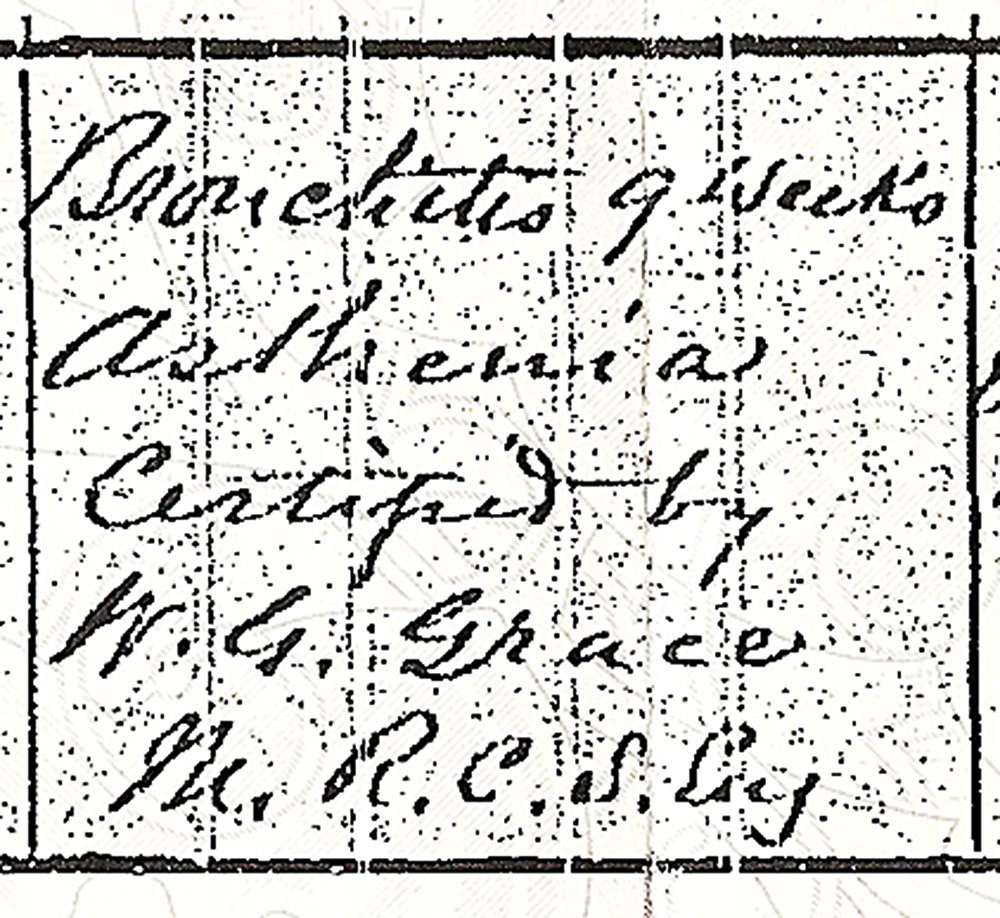
As part of my ongoing family history researches, I've just got a copy of my great grandmother, Sarah Batt's, death certificate. Her death was certified by one W.G.Grace and, after a little Googling, it turns out that this was the man with the bat - or stethoscope on this particular occasion. After qualifying W.G. worked in his own practice in Easton, a largely poor district of Bristol where great grandmother Sarah lived, employing two locums to look after matters when he was away during the cricket season. He was the local Public Vaccinator and had additional duties as the Medical Officer to the Barton Regis Union, which involved tending patients in the workhouse. It is not fanciful to speculate that he probably came across other members of my family whilst doing that. Some of them do feature as sometime inmates of this establishment. There are many testimonies from his patients that he was a good doctor, for example: "Poor families knew that they did not need to worry about calling him in, as the bills would never arrive". I wonder if great grandfather Jacob got a bill from him for the certification?
It occurs to me that that might have been the closest any of my family have come to cricket - then or since. In Sarah Batt's case, she was dismissed for 39. And I'm resisting the temptation to comment on the Batt/cricket/W.G. coincidence.
As part of my ongoing family history researches, I've just got a copy of my great grandmother, Sarah Batt's, death certificate. Her death was certified by one W.G.Grace and, after a little Googling, it turns out that this was the man with the bat - or stethoscope on this particular occasion. After qualifying W.G. worked in his own practice in Easton, a largely poor district of Bristol where great grandmother Sarah lived, employing two locums to look after matters when he was away during the cricket season. He was the local Public Vaccinator and had additional duties as the Medical Officer to the Barton Regis Union, which involved tending patients in the workhouse. It is not fanciful to speculate that he probably came across other members of my family whilst doing that. Some of them do feature as sometime inmates of this establishment. There are many testimonies from his patients that he was a good doctor, for example: "Poor families knew that they did not need to worry about calling him in, as the bills would never arrive". I wonder if great grandfather Jacob got a bill from him for the certification?
It occurs to me that that might have been the closest any of my family have come to cricket - then or since. In Sarah Batt's case, she was dismissed for 39. And I'm resisting the temptation to comment on the Batt/cricket/W.G. coincidence.
![]() |
| My great grandmother, Sarah Batt, died in 1884 in Bristol. She was 39 and a mother of five. Click on the image to see a larger version. |
![]() |
| The cause of death was bronchitis and asthenia (exhaustion) and was certified by W.G.Grace. |
Saturday, 10 August 2013
Unthinkable? Stuff the pandas
Not my words but those of a piece in the Guardian Opinion column today. Judging from the hundreds of on-line comments, it has certainly touched a nerve. Most people are on the side of the cuddly pandas - I've already given you my view of them (here) so you won't be surprised to learn that I side with the (more sensible!) minority on this one. Here's the piece in its entirety - read it and make your own mind up.
Endangered animals, please note: if you want to be saved, get a furry face. As it was announced yesterday that Edinburgh zoo's giant panda, Tian Tian, "may be" pregnant, the usual lip service was once again paid to an animal that resists viability like no other. In choosing to eat bamboo, a foodstuff that it barely has the ability to digest, the panda only extracts 20% of the energy available from its meals (compared to 60 to 90% in carnivores). When not being metabolically ridiculous, they pad off for artificial insemination, as in Tian Tian's case, due to a general reluctance to procreate. The giant panda is, in short, a giant evolutionary mishap. One that sentimentality is obsessed by while funds are disproportionately ciphered away from the other 20,933 species facing extinction. Far from the cameras and cuddly toy stores, birds and bees flounder, but don't get a look in next to the wistful gazes of their fluffy animal cousins. That goes most of all for plants. Who speaks up for the cypress, the fir, the conifer? Yet, according to the latest update from the International Union for Conservation of Nature red list of threatened species last month, 34% of these species, some of the oldest and largest living on earth, are facing extinction. Yet their forests remove three times more carbon from the atmosphere than their temperate or tropical counterparts, and they support a host of animal life. If humans wish to live responsibly and sustainably, conservation is vital; but let's look to ecology rather than cuteness for where to put our money.
Friday, 9 August 2013
Culinary Disasters Part 1
Friends for breakfast and maple syrup basted crispy bacon was on the menu. It was very quickly taken off! Hooray for my IKC's cottage cheese pancakes - at least one of us got it right!
Serendipity at the Tip
A doubly fruitful trip to the Launceston Amenity Tip yesterday. Firstly, I got rid of a load of stuff for recycling and, secondly, whilst waiting patiently in the queue for a slot at the right skip, I heard on the radio (was it R4?) someone read the following poem by Bertolt Brecht. Brecht wrote it in 1935 and it's entitled 'Questions from a Worker Who Reads'. I'm not that familiar with Brecht as a poet and I was very pleasantly surprised to find that I enjoyed it more than I'd assumed I would.
Who built Thebes of the seven gates?
In the books you will find the names of kings.
Did the kings haul up the lumps of rock?
And Babylon, many times demolished
Who raised it up so many times? In what houses
of gold-glittering Lima did the builders live?
Where, the evening that the Wall of China was finished
Did the masons go? Great Rome
Is full of triumphal arches. Who erected them? Over whom
Did the Caesars triumph? Had Byzantium, much praised in song
Only palaces for its inhabitants? Even in fabled Atlantis
The night the ocean engulfed it
The drowning still bawled for their slaves.
The young Alexander conquered India.
Was he alone?
Caesar beat the Gauls.
Did he not have even a cook with him?
Philip of Spain wept when his armada
Went down. Was he the only one to weep?
Frederick the Second won the Seven Year's War. Who
Else won it?
Every page a victory.
Who cooked the feast for the victors?
Every ten years a great man?
Who paid the bill?
So many reports.
So many questions.
There's lots to think about behind the words but I'm not in the mood for a Marxian analysis of their meaning right at this moment. You can do that for yourselves! I didn't catch who read the poem on the radio programme (but they were good) and have tried to find a decent recording on Youtube but to no avail. However, I did come across two audio-visual presentations of it. One good (the first one) and the other complete rubbish - a brutalist object lesson in how to mess up a good poem.
In the books you will find the names of kings.
Did the kings haul up the lumps of rock?
And Babylon, many times demolished
Who raised it up so many times? In what houses
of gold-glittering Lima did the builders live?
Where, the evening that the Wall of China was finished
Did the masons go? Great Rome
Is full of triumphal arches. Who erected them? Over whom
Did the Caesars triumph? Had Byzantium, much praised in song
Only palaces for its inhabitants? Even in fabled Atlantis
The night the ocean engulfed it
The drowning still bawled for their slaves.
The young Alexander conquered India.
Was he alone?
Caesar beat the Gauls.
Did he not have even a cook with him?
Philip of Spain wept when his armada
Went down. Was he the only one to weep?
Frederick the Second won the Seven Year's War. Who
Else won it?
Every page a victory.
Who cooked the feast for the victors?
Every ten years a great man?
Who paid the bill?
So many reports.
So many questions.
There's lots to think about behind the words but I'm not in the mood for a Marxian analysis of their meaning right at this moment. You can do that for yourselves! I didn't catch who read the poem on the radio programme (but they were good) and have tried to find a decent recording on Youtube but to no avail. However, I did come across two audio-visual presentations of it. One good (the first one) and the other complete rubbish - a brutalist object lesson in how to mess up a good poem.
Tuesday, 6 August 2013
Panda-ring to my whims
I've mentioned before that my mind has a mind of its own and sometimes takes me in the most unexpected directions. My last post is a good exemplar of this: I mentioned that the Lion King was coming to Plymouth and then, at Warp Speed 8, my thoughts took me through a loosely connected string of the Royals, Giant Pandas, the CIA and Newark Airport. How so? Pour yourself the beverage of your choice, settle down in a comfortable chair and I'll explain.
It started with the picture of the Royal Family and, for some completely unfathomable reason, the thought crossed my mind that, as a nation, we are clearly better at breeding royals than breeding Giant Pandas. A great pity really, in my opinion, as Giant Pandas are commonly held to be charming creatures (I have a view on this and that will come later) unlike some of the Royals.
Once I had Pandas on my mind, the name Chi Chi came zooming into consciousness. Chi Chi? For those who don't know, Chi Chi was
refused entry to the United
States. As the only Giant Panda in the west she was a star attraction for many
years and regularly made the news - particularly when she refused to mate with An An. In July 1972, Chi Chi died and after a modest period of public mourning, she was unceremoniously stuffed and
displayed in the Natural History Museum. I know this tale is true because I've seen the less-than-natural montage she has been consigned to for eternity - or until her fur drops out. Whichever comes first. My money would be on the loss of fur as she was looking decidedly moth-eaten when I saw last her.
It started with the picture of the Royal Family and, for some completely unfathomable reason, the thought crossed my mind that, as a nation, we are clearly better at breeding royals than breeding Giant Pandas. A great pity really, in my opinion, as Giant Pandas are commonly held to be charming creatures (I have a view on this and that will come later) unlike some of the Royals.
Once I had Pandas on my mind, the name Chi Chi came zooming into consciousness. Chi Chi? For those who don't know, Chi Chi was
Britain's most famous Giant Panda. She arrived at London Zoo in 1958 by default as she was originally destined for an American zoo. But this was the time of the Cold War, Washington had ceased all
trade with communist China and so Chi Chi was
refused entry to the United
States. As the only Giant Panda in the west she was a star attraction for many
years and regularly made the news - particularly when she refused to mate with An An. In July 1972, Chi Chi died and after a modest period of public mourning, she was unceremoniously stuffed and
displayed in the Natural History Museum. I know this tale is true because I've seen the less-than-natural montage she has been consigned to for eternity - or until her fur drops out. Whichever comes first. My money would be on the loss of fur as she was looking decidedly moth-eaten when I saw last her.
Right that's the Royals and Pandas dealt with. What about the CIA and Newark Airport? This is where I confess to something I have in common with Chi Chi: I, too, was once refused entry to the USA, probably by the CIA, at Newark Airport, New Jersey. Alas, this is a story for another day but it will be worth (?) waiting for.
And, finally, I mentioned I have a view on the belief that Giant Pandas are charming creatures. Well, I have seen them close up in the zoo at Beijing and came away thinking that they were smelly, charmless brutes. But they obviously have good PR, otherwise how come they've beguiled almost everyone else into thinking the opposite? And talking of smelly, charmless brutes, don't get me started on meerkats.
Monday, 5 August 2013
The Lion King cometh........

The programme for the forthcoming season at the Theatre Royal in Plymouth dropped through our letter box a couple of days ago. As you can see from its front cover, a production of The Lion King features prominently in what they have to offer.
I've heard that it's spectacular and worth going to see but it's really not my sort of thing. Having said that, if it contains scenes such as the one below, I could be tempted...........
Sunday, 4 August 2013
Feeling crusty!
Yesterday was the day of the Stoke Climsland Flower Show and, as is becoming a custom, I entered some bread in various categories. A few prizes came my way but not, to my chagrin, for my wholemeal loaves. Boo hoo! I wuz robbed.
Each show leaves me with a pile of day-old bread that has been standing in a hot tent all day. What to do with it? Put it out for the birds? Nah, they can fend for themselves at this time of year. Make an enormous Bread Pudding that's what! This is soul food but not for the diet conscious or the faint hearted.
And my IGC won prizes for her rather excellent Madeira Cake and a display of three dahlias. A good day all around for the Parsons household - but we won't let the success go to our heads. We'll still speak to our friends although a little extra deference from them might be in order. And pigs might fly.
Saturday, 3 August 2013
We are the Champions!
OK, it won't last but let's savour the (brief)moment when Newport County, in their first season back in the Football League, are top of Division Two. A fairy-tale start to their campaign with a 4-1 win over Accrington Stanley. Up the Port, as Harry Laws would say.
Friday, 2 August 2013
The price of coal was cheap in 1913
I mentioned the Senghenydd Colliery Disaster of 1913 in a post a while back (here) Just to remind you about the detail: there was an explosion at the pit which took the lives of 439 miners (boys and men) plus 1 rescue worker. The mine manager and the owners (who had previous form - 81 men had also died there in 1901, just 12 years earlier) were prosecuted and fined a paltry £24. This caused national outrage and newspapers of the time wrote that the life of a miner was worth just one shilling and a penny farthing.
Why bring it up again? Because Nicola Rees has just posted a beautifully put together video about it on the Caerphilly Family History page (here) and below. A fitting tribute and one I find extremely moving. It's well worth putting aside 8 minutes to follow it through to the end. And the music? It's by Laurence Equilbey and is called Agnus Dei, Adagio Op. 11.
For ever the politico, I can see some present day parallels in this tragedy. But not in the UK, thank goodness, although I don't think we should be too complacent. I'm thinking about the factory fire in Bangladesh earlier on this year in which 1129 people were killed. A combination of wanting production costs as low as possible, appalling worker safety standards and practically no government regulation. The incident came as a stark reminder of the human cost behind the plentiful supply of affordable goods on our high streets. Echoing, if you will, the human cost behind the production of coal in pre-nationalisation days (a theme I touched on in this post). |
Thursday, 1 August 2013
Royal Birth Tat
For those Royalists who are sartorially challenged, an offering from Private Eye.
That's it. No more mention of the Royal Birth. Bored, bored, bored.
But this Private Eye offer brings to mind the issue when they were selling World War 1 for £4 million. It was around 1966/67 when I was a callow student. I sent them a cheque for the said amount but they never cashed it. A good thing really as I only had about £2 in my account at the time. And I'm not sure my landlady (Mrs Rowland, 6, Sea View Place, Aberystwyth) could have coped with all those soldiers in her living room. She found four students hard enough at the best of times. Mind you, a couple of her greasy breakfasts and an armistice would have been called pretty quickly. They certainly wouldn't have gone over the top for her fried bread.
Subscribe to:
Posts (Atom)